
No products in the cart.
Perfume Oil vs Eau De Parfum: Which Fragrance Format Is Right For You
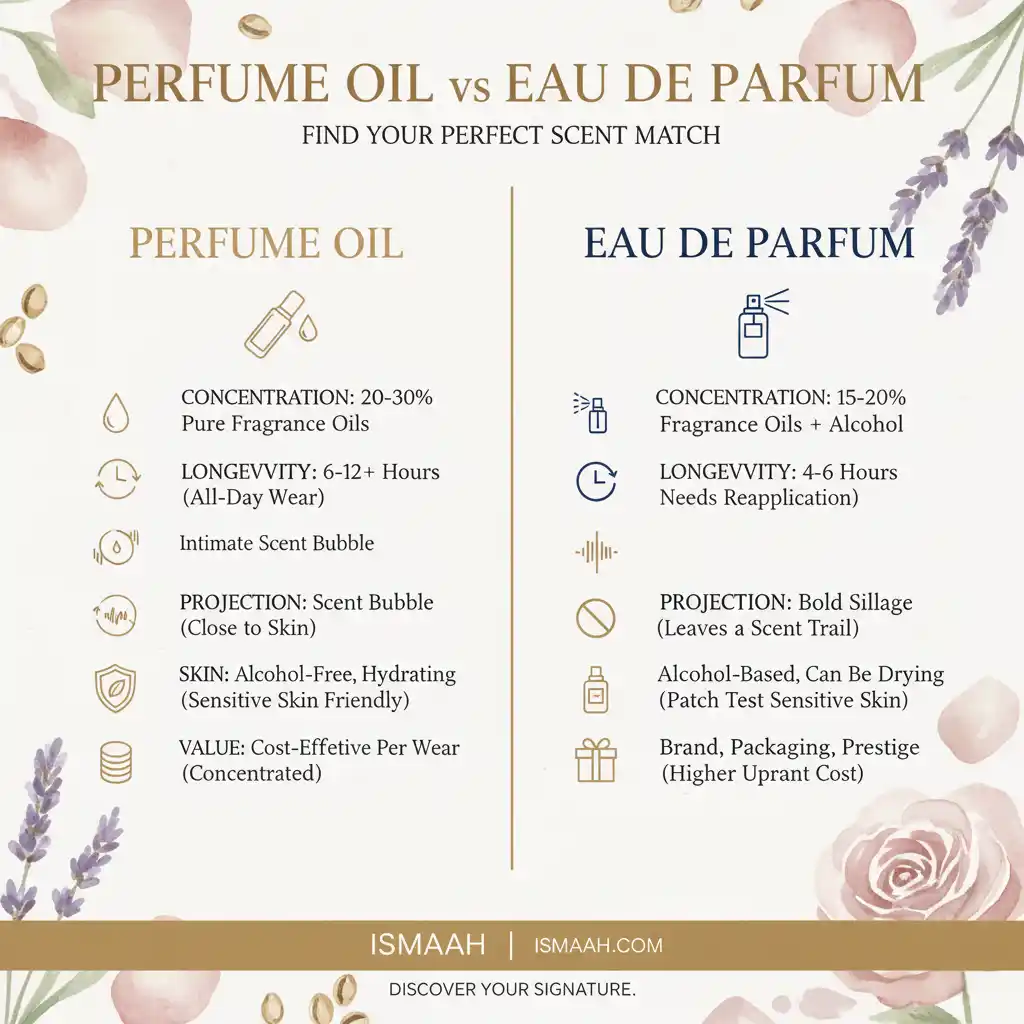
When choosing between perfume oil vs eau de parfum, understanding the real differences helps you make the right choice for your skin and lifestyle. Perfume oils are alcohol-free concentrates with 20-30% fragrance oils that last 6-12+ hours with an intimate scent. Eau de parfum contains 15-20% fragrance oils mixed with alcohol, lasting 4-6 hours with stronger projection.
At Ismaah, we’ve seen how the right fragrance format transforms your scent experience. Whether you prefer the long-lasting richness of traditional perfume oils or the fresh burst of eau de parfum, your choice affects everything from longevity to skin comfort.
Let’s explore the key differences to help you find your perfect scent match.
What Makes Perfume Oil And Eau De Parfum Different
The main difference lies in what makes up each fragrance. Perfume oils are alcohol-free concentrates containing 20-30% pure fragrance oils blended with carrier oils like jojoba or coconut oil. This creates a rich, moisturizing base that bonds directly with your skin.
Eau de parfum takes a different approach. According to perfume industry standards, it blends 15-20% fragrance oils with alcohol and water. The alcohol acts as a carrier that helps the scent disperse quickly through the air. This creates that immediate burst of fragrance when you first spray it.
The concentration difference is significant. With perfume oils, you get more actual fragrance per drop. With eau de parfum, you’re paying for fragrance oils plus the alcohol and water that make up 80-85% of the formula. Neither format is better, they just serve different purposes based on your needs.
These composition differences create distinct experiences on your skin.
Which Lasts Longer On Your Skin
Perfume oils win the longevity race with 6 to 12 hours of wear. Some high-quality oils can even last until the next day. We’ve tested various formulations and found that long-lasting perfume oils consistently outlast their alcohol counterparts.
Eau de parfum typically lasts 4 to 6 hours on skin. According to fragrance industry research, the alcohol evaporates quickly, taking fragrance molecules with it. By mid-afternoon, most alcohol-based perfumes need reapplication to maintain their presence.
Why does perfume oil last longer? Without alcohol, there’s no rapid evaporation. The oil bonds with your skin’s natural oils, releasing fragrance slowly throughout the day. Your body heat activates the scent gradually rather than all at once.
Several factors affect how long either type lasts. Oily skin holds fragrance better than dry skin. Hot, humid environments speed up evaporation. The amount you apply matters, but with concentrated oils, a little goes much further than spray perfumes.
If all-day scent is your priority, perfume oils deliver better staying power.
How To Apply Roll On Oils Vs Spray Perfumes
Application methods differ significantly between these two formats. Perfume oils come in roll-on bottles or droppers designed for precise application. Roll or dab the oil directly onto pulse points: wrists, neck, behind ears, and inner elbows.

The key with oils is to dab, not rub. Rubbing breaks down fragrance molecules and shortens wear time. Apply just a small amount. Because oils are concentrated, two to three dabs provide plenty of scent. The warmth of your pulse points activates the fragrance throughout the day.
Eau de parfum sprays require different technique. Hold the bottle 6-8 inches from your skin and spray. You can apply it to skin, hair, and clothes. The alcohol base means it won’t stain fabric like oils might. Most people use 3-5 sprays for full coverage.
With eau de parfum, you’ll reapply every 4-6 hours. With perfume oils, morning application usually lasts through evening. This makes oils more convenient for long days when you can’t reapply.
Mastering application technique helps you get the most from either format.
Intimate Vs Bold How Each Type Projects
How far your fragrance travels depends entirely on which format you choose. Perfume oils create what we call an intimate scent bubble. The fragrance stays close to your skin, usually within 6-12 inches. Only people near you will notice your scent.
This intimate projection makes oils perfect for office environments, close spaces, and situations where you don’t want to overpower others. Your scent becomes personal, discovered rather than announced. At Ismaah, many customers choose perfume oils specifically for this subtle sophistication.
Eau de parfum creates a scent trail called sillage. The alcohol carries fragrance molecules into the air, spreading your scent several feet away. People smell your perfume before you enter a room and after you leave. This makes a statement.
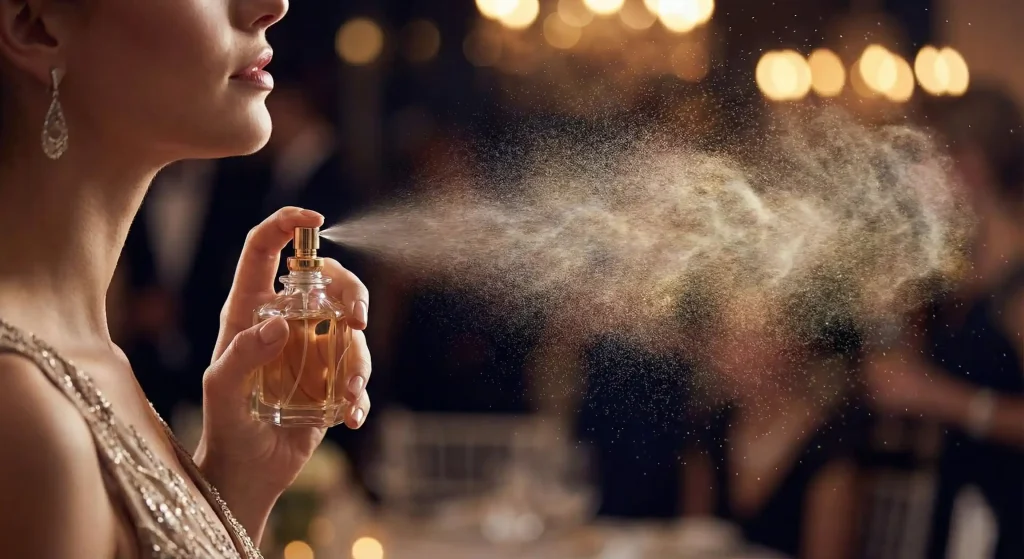
Bold projection works beautifully for evening events, special occasions, and times when you want your presence noticed. The fresh burst of eau de parfum announces confidence. But in shared spaces like offices or public transport, this strength can overwhelm.
Neither projection style is better, just different purposes. Consider where you’ll wear the fragrance. Professional settings often call for intimate oils. Social events might suit bolder eau de parfum.
Your lifestyle and preferences determine which projection style suits you best.
Best Choice For Sensitive Skin
If you have sensitive or dry skin, perfume oils offer clear advantages. The alcohol-free formula eliminates the most common irritant in traditional perfumes. According to dermatology research, alcohol can break down vital proteins and lipids, compromising the skin barrier. Instead of stripping moisture, the carrier oils in perfume oils actually hydrate your skin with each application.
Alcohol can dry skin, strip natural oils, and cause redness or irritation. We’ve heard from many customers who switched to perfume oils after years of discomfort with alcohol-based fragrances. The difference in skin comfort is immediate.
Quality perfume oils use natural carrier oils like jojoba, coconut, or almond oil. These oils are rich in vitamins and fatty acids that nourish skin. They’re naturally hypoallergenic and gentle on conditions like eczema or rosacea. At Ismaah, our alcohol-free perfume collection features oils that create a protective barrier rather than compromising your skin’s natural balance.
Who should choose perfume oils for skin health? Anyone with sensitive skin, dry skin, skin conditions, or allergy-prone skin. People who experience tightness, redness, or itching from regular perfumes find relief with oil-based alternatives.
Still, individual reactions vary. Always patch test any new fragrance on your inner wrist first. Wait 24 hours to check for reactions. This applies to both oils and alcohol-based perfumes, though oils cause reactions far less frequently.
For most people with sensitive skin, alcohol-free oils provide comfortable wear.
Which Offers Better Value For Money
When calculating true value, consider cost per wear rather than bottle price. Perfume oils often cost less upfront than designer eau de parfums. But the real savings come from concentration and longevity.
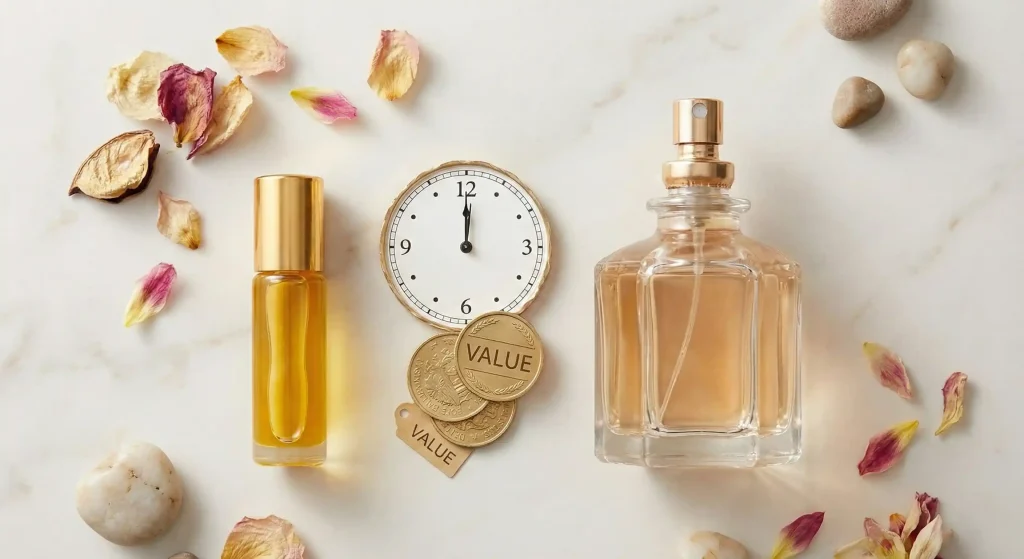
A 6ml perfume oil contains 20-30% pure fragrance. You use just 2-3 drops per application. That small bottle provides 50-100 applications depending on usage. Compare this to a 50ml eau de parfum with 15-20% fragrance concentration requiring 3-5 sprays per use. You get far fewer applications from the larger bottle.
Longevity multiplies the value difference. Perfume oils last 6-12 hours, often requiring just one application daily. Eau de parfum needs reapplication every 4-6 hours. You’re essentially using twice as much product for the same coverage time.
Designer eau de parfums carry premium pricing. You pay for brand prestige, marketing campaigns, elaborate packaging, and retailer markups. The actual fragrance oils represent a small percentage of the cost. Independent perfume oil makers eliminate many of these costs, directing more value to the actual scent.
One consideration: perfume oils lack the prestige packaging of luxury perfumes. If you value the experience of designer bottles and brand names, eau de parfum delivers that. But if you prioritize the fragrance itself over packaging, oils provide exceptional value.
For budget-conscious buyers, concentrated oils deliver more scent for less money.
How Each Format Affects Fragrance Notes
The base you choose actually changes how a fragrance smells. Perfume oils smell sweeter and rounder. The oil base softens sharp top notes like citrus or spices. You’ll notice more prominence of heart and base notes, the deeper, richer elements of the fragrance.
Oils evolve slowly with your body heat. The scent unfolds gradually over hours, revealing different layers as time passes. This creates a more personalized fragrance experience. The same oil smells slightly different on each person because it blends with individual body chemistry.
Eau de parfum delivers a bright burst on application. The alcohol acts like an exclamation mark, amplifying top notes immediately. You get that fresh, lively opening that many people associate with “perfume smell.” Citrus notes sparkle, spices pop, florals bloom intensely.
But this brightness fades as alcohol evaporates. The scent progresses through its notes faster. What starts bold becomes subtle within a few hours. This rapid evolution means the fragrance changes character more noticeably throughout the day.
Neither smells better, just different. Some fragrances are designed specifically for oil or alcohol bases. The same scent name in oil versus eau de parfum can smell surprisingly different. This is why sampling both formats helps you find what you truly enjoy.
Understanding these character differences helps set proper expectations.
Perfume Oil Or Eau De Parfum Decision Guide
Making the right choice depends on your specific needs and preferences. Here’s when each format shines.
Choose Perfume Oil When
You have sensitive or dry skin that reacts to alcohol. The gentle, moisturizing formula prevents irritation while delivering beautiful scent.
You want all-day longevity without reapplication. One morning application carries you through evening without touch-ups.
You prefer intimate, close-to-skin scent. You want people to notice your fragrance only when they’re near you, not from across the room.
You’re in shared spaces like offices or meetings. Subtle projection respects others while still allowing you to enjoy your scent.
You want better value per wear. Higher concentration and longer lasting means you use less product over time.
You appreciate moisturizing benefits. The carrier oils hydrate skin with each application, especially beneficial for dry climates.
Choose Eau De Parfum When
You want noticeable scent projection. You love when your fragrance announces your presence and leaves a trail.
You enjoy bold fragrance statements. Making an impression with your scent is part of your style.
You prefer spray application convenience. Quick spritzes feel more familiar and easier than roll-on application.
You’re attending special events or evenings out. The immediate impact and strong sillage suit celebrations and social occasions.
You want bright, fresh opening notes. That vibrant burst of top notes is essential to your fragrance experience.
You can apply to hair and clothes. The alcohol base means no risk of oil stains on fabric.
Many fragrance lovers keep both formats for different occasions and moods.
Finding Your Perfect Fragrance Match
The choice between perfume oil vs eau de parfum comes down to your personal priorities. Perfume oils deliver exceptional longevity, gentle skin-friendliness, and impressive value. Eau de parfum provides bold projection, fresh vibrancy, and versatile application.
Neither format is wrong. They serve different purposes for different moments in your life. Consider your skin sensitivity first. If alcohol causes any discomfort, oils are the clear choice. Then think about your lifestyle. Do you need all-day wear or prefer changing scents throughout the day?
Budget matters too. Oils stretch further thanks to concentration and longevity. But if you value designer packaging and brand experience, eau de parfum delivers that prestige. Your projection preference guides the decision as well. Intimate or bold? Close or far-reaching?
We recommend trying both formats in scents you love. You might discover you prefer oils for daily wear and eau de parfum for special occasions. Or you might find one format suits you perfectly for all situations.
Whether you choose the intimate richness of perfume oils or the bold presence of eau de parfum, your perfect scent awaits.
Frequently Asked Questions
Does perfume oil last longer than eau de parfum?
Yes, perfume oils typically last 6-12+ hours compared to eau de parfum’s 4-6 hours. The absence of alcohol prevents rapid evaporation, allowing the fragrance to bond with your skin oils and release slowly throughout the day.
Can I use perfume oil if I have sensitive skin?
Perfume oils are ideal for sensitive skin because they contain no alcohol. The natural carrier oils like jojoba and coconut oil actually moisturize skin rather than drying it. Always patch test first, but oils cause far fewer reactions than alcohol-based perfumes.
Why is eau de parfum more expensive than perfume oil?
Eau de parfum pricing includes brand prestige, marketing costs, elaborate packaging, and retailer markups. The actual fragrance oils represent a small percentage of the cost. Perfume oils, especially from independent makers, direct more of the price toward the actual scent concentrate.
Which is better for daily wear?
Perfume oils work better for most daily situations. They provide all-day longevity with one application, stay close to skin in professional settings, and won’t overpower others in shared spaces. Eau de parfum suits occasions when you want noticeable projection.
Do perfume oils stain clothes?
Perfume oils can stain fabric because of their oil base. Apply them directly to skin on pulse points rather than on clothing. If you want to scent your clothes, eau de parfum’s alcohol base evaporates without leaving residue.