
No products in the cart.
Understanding Fragrance Notes: A Complete Guide to the Perfume Pyramid
Have you ever wondered why your cologne smells different in the morning than it does hours later? Or why fragrance descriptions mention “top notes,” “heart notes,” and “base notes”? Understanding fragrance notes is the key to unlocking the complex world of perfumery, making informed purchasing decisions, and truly appreciating the artistry behind every bottle.
This comprehensive guide demystifies the fragrance pyramid, explores over 50 individual notes across all categories, and teaches you how to identify, combine, and select fragrances based on their note compositions. Whether you’re a fragrance novice or an enthusiast looking to deepen your knowledge, mastering fragrance notes transforms how you experience and choose scents.
What Are Fragrance Notes?
Fragrance notes are the individual scent components that make up a complete perfume composition. Just as a musical chord contains multiple notes that play together to create harmony, a fragrance contains multiple aromatic ingredients that blend to create a cohesive scent experience.
Perfumers carefully select and balance these notes to create fragrances that:
- Evolve over time on your skin
- Create emotional responses and memories
- Suit different personalities and occasions
- Achieve specific longevity and projection goals
Understanding these notes helps you:
- ✓ Predict how a fragrance will develop throughout the day
- ✓ Choose scents that match different occasions
- ✓ Identify which notes work best with your body chemistry
- ✓ Build a complementary fragrance collection
- ✓ Communicate your preferences to sales associates and friends
The Fragrance Pyramid: How Perfume Evolves
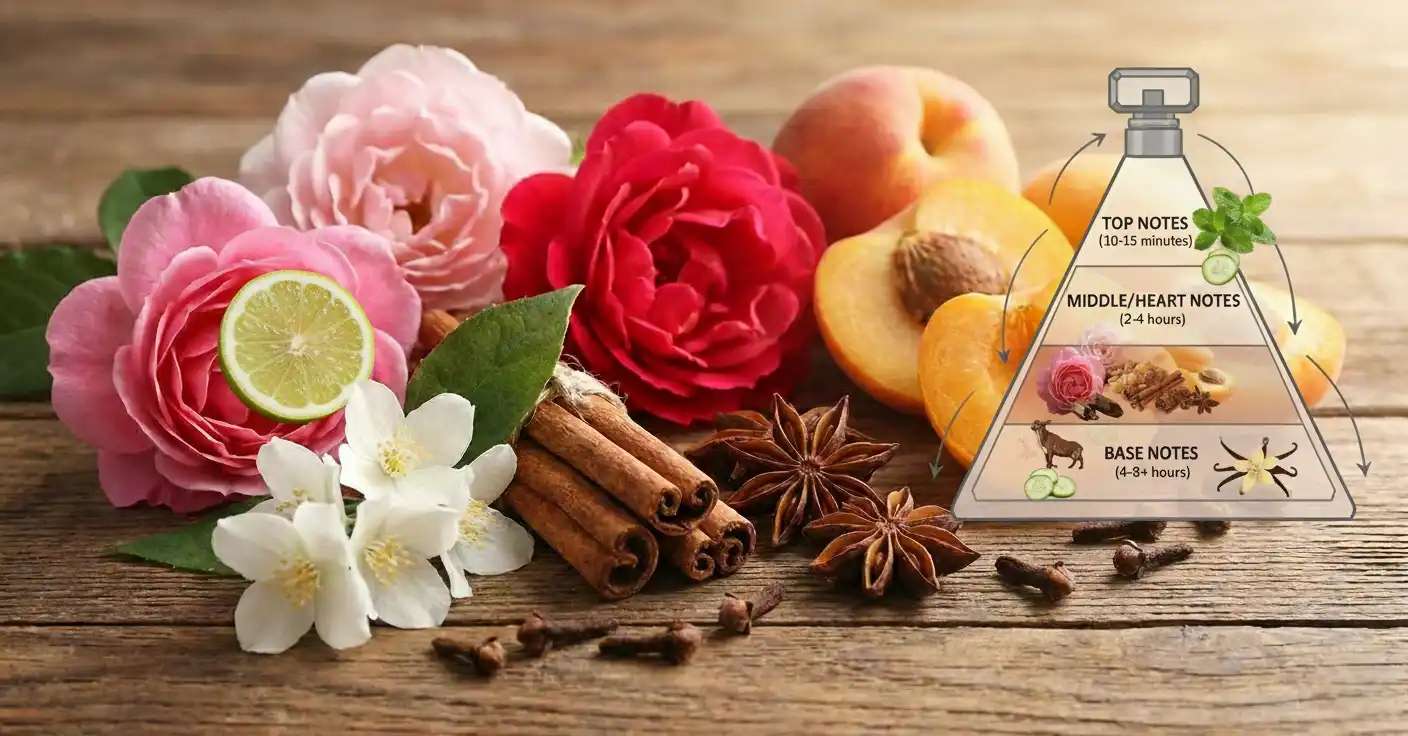
The fragrance pyramid (also called the perfume pyramid or scent pyramid) is a visual representation of how fragrances are structured and how they evolve over time on your skin. This pyramid has three distinct layers, each playing a crucial role in the overall scent experience.
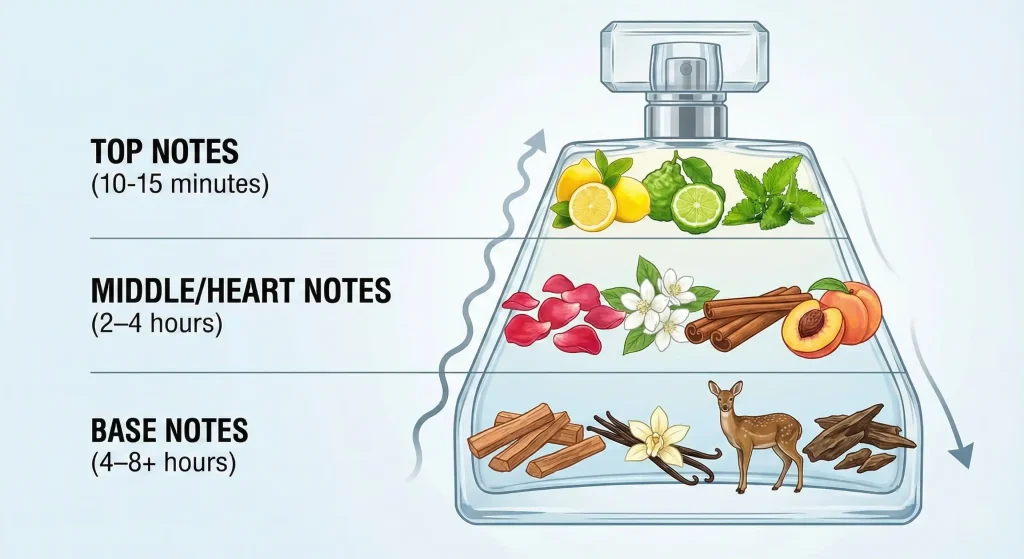
TOP NOTES
10-15 minutes
MIDDLE/HEART NOTES
(2-4 hours)
BASE NOTES
(4-8+ hours)
Understanding this structure is essential because fragrances are designed to change as you wear them. What you smell in the bottle or during the first spray is not the “true” scent, it’s just the beginning of an olfactory journey.
Top Notes: The Opening Act (First Impressions)

What Are Top Notes?
Top notes (also called head notes or opening notes) are the first scents you smell immediately upon applying a fragrance. These are the lightest, most volatile molecules that evaporate quickly, typically lasting 10-15 minutes before transitioning to the heart notes.
Characteristics of Top Notes
- Volatile: Evaporate quickly due to low molecular weight
- Fresh and light: Create immediate impact and first impressions
- Sharp or bright: Often perceived as energizing or uplifting
- Short-lived: Fade within 15-30 minutes of application
Why Top Notes Matter
Top notes are the “handshake” of a fragrance, they determine whether you’re initially attracted to a scent. This is why testing fragrances in stores can be misleading; you’re primarily experiencing top notes, not the complete composition.
Common mistake: Buying a fragrance based solely on top notes, only to discover you dislike the heart and base once they develop.
Most Common Top Note Families
Citrus Top Notes
Characteristics: Fresh, bright, zesty, energizing, clean
Common citrus notes:
- Bergamot: Elegant, slightly bitter citrus found in countless men’s fragrances
- Lemon: Sharp, clean, unmistakably fresh
- Grapefruit: Bitter-sweet, modern, sophisticated
- Orange: Sweet, cheerful, approachable
- Mandarin: Softer, sweeter than orange
- Lime: Tart, green, invigorating
- Yuzu: Japanese citrus, complex and sophisticated
Best for: Office fragrances, summer wear, daytime occasions, active lifestyles
Aromatic Top Notes
Characteristics: Herbal, fresh, green, natural
Common aromatic notes:
- Lavender: Calming, clean, classic masculine note
- Rosemary: Sharp, herbal, Mediterranean
- Mint: Cooling, fresh, invigorating
- Basil: Green, slightly spicy, unique
- Sage: Earthy, herbal, sophisticated
Best for: Fresh fragrances, fougère compositions, versatile daily wear
Fresh/Green Top Notes
Characteristics: Clean, natural, outdoorsy
Common fresh notes:
- Green tea: Clean, airy, modern
- Cucumber: Watery, cool, spa-like
- Fresh-cut grass: Natural, outdoorsy, nostalgic
- Aquatic/Marine notes: Ozonic, sea-like, breezy
Best for: Spring/summer fragrances, office-appropriate scents, casual wear
Fruity Top Notes
Characteristics: Sweet, juicy, appetizing
Common fruity notes:
- Apple: Crisp, fresh, slightly sweet
- Pear: Soft, delicate, sophisticated
- Pineapple: Tropical, sweet, bold
- Blackcurrant: Tart, sophisticated, modern
Best for: Youthful fragrances, casual occasions, approachable scents
Middle Notes (Heart Notes): The True Character (2-4 Hours)
What Are Middle Notes?
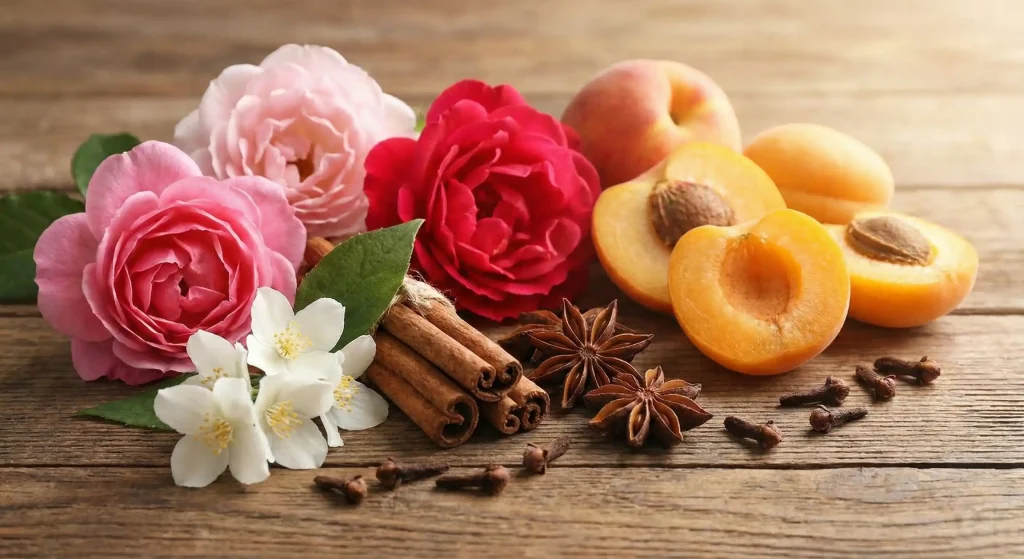
Middle notes (also called heart notes) emerge as the top notes fade, typically appearing 15-30 minutes after application and lasting 2-4 hours. These notes form the core character of the fragrance, the “true scent” that defines the perfume’s personality.
Characteristics of Middle Notes
- More complex: Richer and fuller than top notes
- Balanced: Bridge between volatile top notes and heavy base notes
- Defining: Make up 40-70% of the fragrance’s identity
- Moderate longevity: Last several hours before transitioning to base
Why Middle Notes Matter
Heart notes reveal the actual identity of a fragrance. This is what you’ll smell during most of your wear time and what others will perceive when they’re near you. When testing fragrances, wait at least 15-30 minutes to experience the heart notes before making a purchase decision.
Most Common Middle Note Families
Floral Heart Notes
Characteristics: Romantic, elegant, sophisticated, natural
Common floral notes:
- Rose: Classic, romantic, ranging from fresh to deep
- Jasmine: Rich, sweet, intoxicating, sensual
- Ylang-ylang: Tropical, creamy, exotic, heady
- Neroli: Orange blossom, fresh, elegant, refined
- Lavender: (Can be top or heart) Versatile, calming, aromatic
- Violet: Powdery, nostalgic, delicate
- Geranium: Green-floral, slightly minty, masculine-leaning
- Iris: Powdery, sophisticated, expensive-smelling
Best for: Romantic occasions, spring fragrances, sophisticated compositions
Note: Many men avoid florals, but masculine fragrances often contain floral heart notes balanced with woods and spices.
Spicy Heart Notes
Characteristics: Warm, exciting, exotic, attention-grabbing
Common spicy notes:
- Cinnamon: Sweet-spicy, warm, comforting, reminiscent of holidays
- Cardamom: Complex, aromatic, slightly citrusy, sophisticated
- Black pepper: Sharp, spicy, modern, masculine
- Pink pepper: Lighter, fresher, slightly sweet, trendy
- Nutmeg: Warm, sweet-spicy, cozy, autumn-like
- Clove: Intense, warm, slightly medicinal, powerful
- Ginger: Zesty, warm, energizing
Best for: Date nights, cold weather, oriental fragrances, creating warmth and intrigue
Fruity Heart Notes
Characteristics: Sweet, juicy, playful, approachable
Common fruity heart notes:
- Peach: Soft, fuzzy, sweet, comforting
- Apricot: Similar to peach, slightly tart
- Plum: Dark, rich, wine-like sweetness
- Fig: Green-sweet, milky, Mediterranean
- Coconut: Tropical, creamy, vacation-like
Best for: Casual wear, summer fragrances, approachable scents
Green/Aromatic Heart Notes
Characteristics: Natural, fresh, outdoorsy
Common green notes:
- Clary sage: Herbal, slightly sweet, sophisticated
- Tea notes: Clean, fresh, meditative
- Violet leaf: Green, cucumber-like, aquatic
Best for: Office fragrances, versatile wear, fresh compositions
Base Notes: The Foundation (4-8+ Hours)
What Are Base Notes?
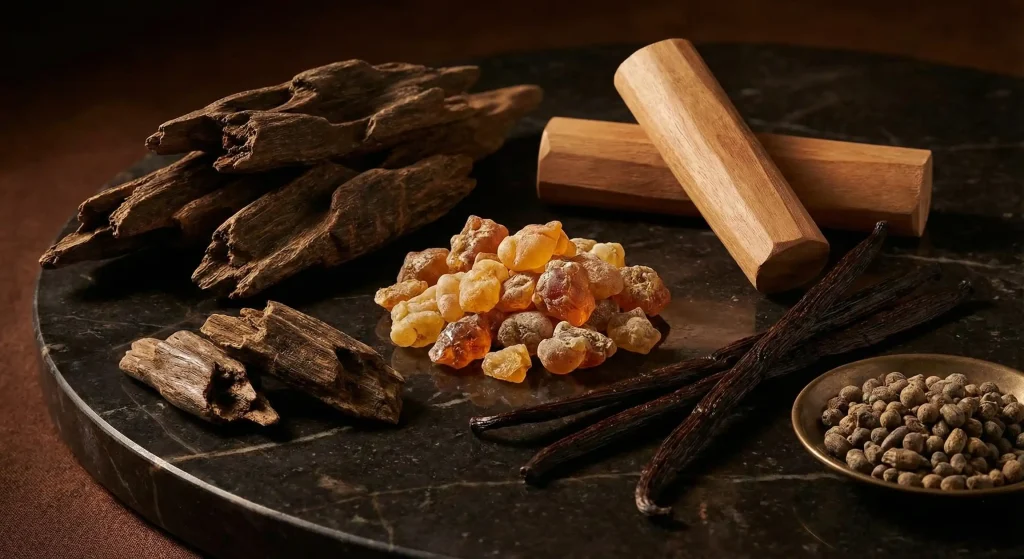
Base notes are the deepest, longest-lasting components of a fragrance, providing the foundation that carries the scent through its final stages. These notes appear 30 minutes to 2 hours after application and can last 4-8 hours or longer, often remaining detectable on clothing for days.
Characteristics of Base Notes
- Heavy molecules: Evaporate slowly due to high molecular weight
- Rich and deep: Provide depth, warmth, and substance
- Long-lasting: The primary factor in fragrance longevity
- Fixative properties: Help “fix” or anchor lighter notes, extending overall wear time
Why Base Notes Matter
Base notes determine:
- How long your cologne lasts throughout the day
- The dry-down character, what you smell in the evening
- The scent trail (sillage) you leave behind
- How “expensive” or “cheap” a fragrance smells
When selecting long-lasting perfumes for men, the base note composition is the most critical factor.
Most Common Base Note Families
Woody Base Notes
Characteristics: Warm, natural, grounding, masculine, sophisticated
| Woody Note | Scent Profile | Character | Longevity | Common Usage |
| Sandalwood | Creamy, smooth, milky, expensive-smelling | Warm, comforting, universally appealing | 6-8 hours | Countless men’s fragrances; versatile bases |
| Cedarwood | Dry, pencil-shaving quality, clean, fresh-woody | Masculine, straightforward, reliable | 5-7 hours | Aromatic fougères, fresh fragrances |
| Vetiver | Earthy, green-woody, smoky, sophisticated | Refined, elegant, mature | 7-9 hours | Masculine fragrances, sophisticated compositions |
| Patchouli | Earthy, slightly sweet, distinct “hippie” association | Deep, rich, distinctive, polarizing | 8-10+ hours | Oriental fragrances, chypres |
| Guaiac Wood | Smoky, rose-like, creamy, medicinal quality | Unique, sophisticated, complex | 6-8 hours | Modern masculine fragrances |
| Oud (Agarwood) | Intensely woody, animalic, medicinal, luxurious | Bold, exotic, powerful, polarizing | 10-12+ hours | Oriental fragrances, luxury/niche perfumes |
Best for: Professional fragrances, versatile wear, masculine scents, sophisticated compositions
Amber/Resinous Base Notes
| Note | Scent Profile | Character | Longevity | Common Usage |
| Amber | Fantasy accord (blend of vanilla, benzoin, labdanum); warm, resinous, sweet | Cozy, enveloping, sensual | 8-12 hours | Oriental fragrances, warm winter scents |
| Benzoin | Vanilla-like, balsamic, sweet, comforting | Soft, warm, slightly powdery | 8-10 hours | Oriental and gourmand fragrances |
| Frankincense (Olibanum) | Resinous, spicy, church-like, meditative | Solemn, sophisticated, exotic, spiritual | 7-9 hours | Incense fragrances, orientals |
| Myrrh | Similar to frankincense but slightly sweeter and more balsamic | Deep, mysterious, contemplative | 7-9 hours | Oriental fragrances, religious-themed scents |
| Labdanum | Leathery-amber, dark, animalic, powerful | Bold, complex, sophisticated | 9-11 hours | Chypre fragrances, leather scents, amber bases |
Best for: Cold weather, evening wear, date nights,
Musk Base Notes
Characteristics: Skin-like, clean, sensual, versatile, long-lasting
Common musk notes:
- White musk: Clean, soapy, fresh, modern, universally appealing
- Used in: Fresh fragrances, daily wear scents
- Longevity: 6-8 hours
- Character: Clean, subtle, comfortable
- Animalic musk: Warm, skin-like, slightly dirty, sensual, natural-smelling
- Used in: Sensual fragrances, niche perfumes
- Longevity: 8-12 hours
- Character: Intimate, provocative, distinctive
Note: Modern musks are synthetic (ethical and sustainable) rather than derived from animals.
Best for: Versatile daily wear, intimate occasions, layering with other fragrances
Vanilla/Sweet Base Notes
Characteristics: Sweet, comforting, dessert-like, cozy, popular
Common sweet notes:
- Vanilla: Sweet, creamy, comforting, universally loved, versatile
- Used in: Gourmand fragrances, orientals, modern masculines
- Longevity: 7-10 hours
- Character: Warm, inviting, crowd-pleasing
- Tonka bean: Vanilla-like with almond, caramel, tobacco nuances, complex
- Used in: Gourmand fragrances, fougères
- Longevity: 8-10 hours
- Character: Rich, sophisticated, multi-faceted
- Coumarin: Hay-like, sweet, almond-like, traditional
- Used in: Classic fougères, masculine fragrances
- Longevity: 6-8 hours
- Character: Warm, nostalgic, comforting
Best for: Date nights, cold weather, casual wear, approachable scents
Leather Base Notes
Characteristics: Sophisticated, bold, masculine, distinctive, edgy
Common leather notes:
- Leather accord: Smoky, tar-like, birch tar, sophisticated, bold
- Used in: Leather fragrances, sophisticated masculines
- Longevity: 8-11 hours
- Character: Edgy, refined, luxurious
- Suede: Softer leather, powdery, elegant, subtle
- Used in: Modern fragrances, sophisticated scents
- Longevity: 6-8 hours
- Character: Refined, smooth, elegant
Best for: Evening wear, sophisticated occasions, statement fragrances
Animalic Base Notes
Characteristics: Bold, sensual, polarizing, attention-grabbing, vintage-inspired
Common animalic notes:
- Ambergris: Marine-animalic, sweet-salty, luxurious, rare (now synthetic)
- Used in: High-end fragrances, aquatic-orientals
- Longevity: 10-12+ hours
- Character: Complex, sophisticated, oceanic
- Castoreum: Leather-like, warm, animalic, vintage-feeling (now synthetic)
- Used in: Leather fragrances, chypres
- Longevity: 9-11 hours
- Character: Bold, distinctive, classic
Best for: Niche fragrance enthusiasts, vintage-inspired compositions, bold personalities
Fragrance Families: Understanding Scent Categories
Fragrance families are broad categories that group perfumes by their dominant characteristics and note compositions. Understanding these families helps you identify scents you’ll likely enjoy and communicate your preferences.
Fresh Fragrance Family
Characteristics: Clean, bright, energizing, light, versatile
Dominant notes: Citrus top notes, aquatic accords, green notes, aromatic herbs
Sub-families:
- Citrus: Lemon, bergamot, grapefruit-focused
- Aquatic/Marine: Sea notes, ozonic accords
- Green: Fresh-cut grass, leaves, vegetables
- Aromatic: Herbs like lavender, rosemary, sage
Best for: Office wear, summer, daytime, active lifestyles, universal appeal
Example fragrances: Lost City by Gissah, Jazzab Silver by Ard Al Zaafaran
Oriental Fragrance Family
Characteristics: Warm, spicy, sensual, exotic, long-lasting, bold
Dominant notes: Spices (cinnamon, cardamom), amber, vanilla, resins, oud
Sub-families:
- Soft oriental: Vanilla, amber, gentle spices
- Spicy oriental: Dominant spice notes
- Woody oriental: Combines oriental warmth with woody base
Best for: Evening wear, cold weather, date nights, special occasions, making statements
Example fragrances: Khamrah by Lattafa, Soul of Arabia Set by Gissah, Khamrah Qahwa
Longevity: Typically exceptional (8-14 hours) due to heavy base notes
Woody Fragrance Family
Characteristics: Natural, warm, sophisticated, masculine, grounding
Dominant notes: Sandalwood, cedarwood, vetiver, patchouli, oud
Sub-families:
- Dry woods: Cedarwood, vetiver-focused
- Aromatic woods: Combines woods with lavender, herbs
- Woody oriental: Adds amber, spices to woody base
Best for: Professional settings, versatile daily wear, mature sophistication, year-round
Example fragrances: Atlas by Gissah, many classic masculine fragrances
Longevity: Good to excellent (6-10 hours)
Fougère Fragrance Family
Characteristics: Traditional masculine, barbershop, aromatic, herbal
Dominant notes: Lavender (heart), oakmoss (base), coumarin (base), geranium
Description: One of the most popular masculine fragrance families, characterized by the classic lavender-oakmoss-coumarin accord.
Best for: Traditional masculine scents, office wear, versatile occasions, barbershop nostalgia
Longevity: Moderate to good (5-8 hours)
Chypre Fragrance Family
Characteristics: Sophisticated, complex, earthy, mossy, elegant
Dominant notes: Bergamot (top), oakmoss (base), labdanum (base), patchouli
Description: Named after Cyprus, these sophisticated fragrances feature the classic bergamot-oakmoss accord.
Best for: Sophisticated wearers, autumn/winter, formal occasions, refined tastes
Longevity: Good to excellent (7-10 hours)
Gourmand Fragrance Family
Characteristics: Sweet, edible, dessert-like, comforting, modern
Dominant notes: Vanilla, caramel, chocolate, coffee, tonka bean, praline
Description: Relatively modern family (popularized in the 1990s) featuring edible, dessert-like notes.
Best for: Casual wear, cold weather, date nights, youthful fragrances, coffee lovers
Example fragrances: Khamrah Qahwa by Lattafa (coffee gourmand)
Longevity: Typically excellent (8-12 hours) due to sweet base notes
Leather Fragrance Family
Characteristics: Bold, sophisticated, smoky, masculine, distinctive
Dominant notes: Leather accord (birch tar, styrax), tobacco, vetiver, patchouli
Description: Distinctive family evoking leather goods, sophistication, and old-world luxury.
Best for: Confident wearers, evening occasions, autumn/winter, statement fragrances
Longevity: Excellent (8-12 hours)
How Fragrance Notes Interact: The Art of Composition
Great perfumery isn’t just about selecting pleasant notes, it’s about how those notes interact, balance, and evolve together. Understanding these interactions helps you appreciate complexity and predict compatibility.
Complementary Note Combinations
Certain notes naturally enhance each other:
Classic pairings:
- Bergamot + Vetiver: Fresh opening with sophisticated woody base
- Lavender + Vanilla: Aromatic freshness softened by sweet warmth
- Rose + Oud: Classic Middle Eastern luxury combination
- Citrus + Amber: Fresh brightness grounded by warm depth
- Pepper + Leather: Spicy edge enhancing masculine sophistication
- Sandalwood + Musk: Creamy woods with skin-like sensuality
Contrasting Notes for Interest
Perfumers use contrasts to create complexity:
- Sweet + Smoky: Vanilla with incense creates mysterious sweetness
- Fresh + Warm: Citrus with amber offers complexity and versatility
- Clean + Dirty: White musk with animalic notes creates intriguing tension
- Light + Heavy: Delicate florals with intense oud provides dramatic evolution
The Role of Transitions
Well-crafted fragrances don’t just layer top-middle-base, they transition smoothly:
- Bridge notes: Ingredients that appear in multiple layers, connecting the stages
- Facets: Single notes revealing different characteristics at different stages
- Development: How the balance shifts as volatile notes fade and heavy notes emerge
This is why making your cologne last all day isn’t just about longevity, it’s about experiencing the complete compositional journey.
Identifying Notes in Fragrances: Developing Your Nose
How to Train Your Nose
1. Smell Single Notes: Visit fragrance stores and smell individual essential oils or fragrance samples:
- Start with obvious notes (lemon, vanilla, rose)
- Progress to complex notes (oud, vetiver, iris)
- Practice identifying them in blends
2. Use Fragrance Strips:
- Spray on paper strips rather than skin initially
- Compare multiple fragrances side-by-side
- Take notes on what you detect
3. Wait for Development:
- Don’t judge fragrances immediately
- Wait 15-30 minutes for heart notes
- Check again after 2-4 hours for base notes
4. Build a Reference Library:
- Keep samples of distinct notes
- Revisit them regularly
- Build olfactory memory
5. Practice with Common Scents: Smell everyday items to build associations:
- Coffee beans (reset your nose between samples)
- Fresh citrus fruits
- Vanilla extract
- Cinnamon sticks
- Fresh herbs
- Wood shavings
Understanding Your Personal Preferences
Track your preferences to understand patterns:
Questions to ask yourself:
- Do I prefer fresh or warm fragrances?
- Am I drawn to sweet or dry compositions?
- Do I like bold or subtle scents?
- Which seasons do I prefer certain notes?
- What notes do I consistently dislike?
Keep a fragrance journal:
- Record fragrances you try
- Note which stages you prefer (top, middle, or base)
- Track how fragrances perform on your skin
- Identify patterns in your favorites
How Skin Chemistry Affects Fragrance Notes
Your unique skin chemistry dramatically impacts how fragrance notes develop and which notes are amplified or muted.
Factors Affecting Fragrance on Your Skin
Skin pH:
- Acidic skin (pH < 7): Fragrances may smell sharper, citrus more pronounced
- Alkaline skin (pH > 7): Fragrances may smell sweeter, vanilla more prominent
- Neutral skin (pH ≈ 7): Closest to perfumer’s intention
Skin oiliness:
- Oily skin: Holds fragrance longer, amplifies certain notes
- Dry skin: Fragrances fade faster, benefit from moisturizing before application
- Combination skin: Variable performance on different body areas
Body temperature:
- Higher temperature: Faster evaporation, stronger projection, shorter longevity
- Lower temperature: Slower development, softer projection, extended wear
Diet and medications:
- Certain foods: Garlic, spices, alcohol can affect skin scent
- Medications: May alter body chemistry and fragrance interaction
- Hydration: Well-hydrated skin performs better with fragrances
Hormones:
- Monthly cycles can affect scent perception and performance
- Stress hormones may alter how fragrances smell on your skin
- Age-related hormonal changes impact fragrance compatibility
Testing Fragrances on Your Skin
Proper testing technique:
- Apply to clean skin: Shower, no competing scents
- Test location: Inner wrist or crook of elbow (pulse points)
- Wait periods:
- 5 minutes: Initial top notes
- 30 minutes: Heart notes emerging
- 2 hours: Base notes developing
- 4 hours: True dry-down character
- Don’t judge immediately: Top notes are misleading
- Test one fragrance per wrist: Maximum two at a time
- Live with it: Wear for a full day before deciding
Seasonal Note Selection: Matching Notes to Weather
Certain notes perform better in specific seasons due to temperature, humidity, and cultural associations.
Spring Fragrance Notes
Best notes for spring:
- Top: Citrus (bergamot, mandarin), green notes, fresh florals
- Middle: Light florals (neroli, lily of the valley, freesia), soft fruits
- Base: Light woods (sandalwood, light cedar), clean musks
Why these work: Moderate temperatures, blooming gardens, renewal themes
Summer Fragrance Notes
Best notes for summer:
- Top: Bright citrus (lemon, grapefruit, lime), aquatic notes, mint
- Middle: Tropical fruits, light florals, green notes
- Base: Vetiver, light musks, minimal sweetness
Why these work: Heat amplifies projection, need for freshness, outdoor activities
Important: Apply less in summer, heat intensifies fragrance. Learn proper application techniques for seasonal adjustments.
Autumn Fragrance Notes
Best notes for autumn:
- Top: Spicy notes (cinnamon, nutmeg), apple, pear
- Middle: Warm spices (cardamom, clove), woody florals, fig
- Base: Amber, vanilla, patchouli, leather, warm woods
Why these work: Cooling temperatures, cozy associations, seasonal traditions
Winter Fragrance Notes
Best notes for winter:
- Top: Warm spices, subtle citrus (to prevent heaviness)
- Middle: Rich spices, incense, dark florals
- Base: Oud, heavy amber, deep vanilla, tonka bean, animalic musks, resins
Why these work: Cold reduces projection (can apply more), indoor gatherings, comfort-seeking, holiday associations
Note: Winter is perfect for long-lasting perfumes with rich base notes like Soul of Arabia by Gissah, Khamrah by Lattafa, and amber-heavy orientals.
Choosing Fragrances Based on Notes
For Fragrance Beginners
Start with versatile, universally appealing notes:
Recommended beginner-friendly notes:
- Top: Bergamot, lavender, lemon
- Middle: Geranium, light spices, soft florals
- Base: Sandalwood, vanilla, white musk
Avoid initially:
- Heavy oud (too bold for most beginners)
- Animalic musks (polarizing)
- Intense gourmands (can be overwhelming)
- Complex chypres (require developed palate)
Recommended starter fragrances:
- Lost City by Gissah: Approachable woods and aromatics
- Jazzab Silver by Ard Al Zaafaran: Fresh, clean, universally acceptable
- Atlas by Gissah: Warm amber, sophisticated but accessible
For Building a Complete Fragrance Wardrobe
Cover these note profiles:
- Fresh daily: Citrus-aquatic-woody (office, casual)
- Warm evening: Oriental-amber-spicy (dates, formal)
- Seasonal cold: Rich vanilla-oud-amber (winter)
- Seasonal warm: Aquatic-citrus-green (summer)
- Signature unique: Distinctive notes reflecting personality
This variety ensures you have appropriate scents for all different occasions and seasons.
For Specific Occasions Based on Notes
Professional/office:
- Prioritize: Citrus, aromatic, light woods, clean musks
- Minimize: Sweet notes, heavy spices, animalics, gourmands
Romantic/date night:
- Prioritize: Vanilla, amber, sensual musks, warm spices, oud
- Minimize: Aggressive citrus, overly fresh notes, ozonic accords
Formal events:
- Prioritize: Refined woods, soft florals, elegant musks, subtle amber
- Minimize: Loud projection, extremely bold notes, novelty accords
Reading Fragrance Descriptions: Decoding the Language
Fragrance descriptions use specific terminology to communicate note compositions and character.
Common Descriptor Terms
“Fresh”: Citrus, aquatic, green notes dominating
“Warm”: Amber, vanilla, spices providing heat
“Woody”: Prominent wood notes in base
“Spicy”: Cinnamon, pepper, cardamom presence
“Sweet”: Vanilla, tonka, gourmand notes
“Green”: Fresh vegetation, grass, leaves
“Aquatic”: Marine, ozonic, water-like notes
“Aromatic”: Herbal lavender, sage, rosemary
“Smoky”: Incense, vetiver, birch tar character
“Powdery”: Iris, violet, soft musk quality
“Animalic”: Musk, oud, leather, ambergris boldness
Understanding Note Listings
Fragrance note pyramids typically list:
TOP NOTES: Bergamot, Lemon, Pink Pepper
MIDDLE NOTES: Geranium, Lavender, Vetiver
BASE NOTES: Amber, Vanilla, Patchouli
How to read this:
- First 15 minutes: Bergamot-lemon freshness with peppery spice
- 30 minutes – 3 hours: Floral-aromatic heart with woody vetiver
- 3+ hours: Warm amber-vanilla sweetness with earthy patchouli depth
Tip: The order of notes within each layer indicates prominence, first mentioned is usually most noticeable.
Advanced Note Concepts
Accords
An accord is a balanced combination of notes that creates a unified scent impression, functioning as a single “note” within the composition.
Common accords:
- Amber accord: Blend of vanilla, benzoin, labdanum
- Fougère accord: Lavender, oakmoss, coumarin
- Chypre accord: Bergamot, oakmoss, labdanum
- Leather accord: Birch tar, styrax, tobacco
- Aquatic accord: Synthetic molecules creating ocean/water impression
Soliflores
Soliflore fragrances focus on showcasing a single flower or note, though they actually use multiple ingredients to create the impression.
Examples: Rose soliflore, violet soliflore
Synthetics vs. Naturals
Modern perfumery uses both:
Natural ingredients:
- Derived from plants, flowers, resins
- Often expensive (rose, jasmine, oud)
- Can vary batch-to-batch
- Traditional and authentic
Synthetic ingredients:
- Created in laboratories
- Consistent, sustainable, ethical
- Enable scents impossible with naturals (aquatics, ozone)
- Often more affordable
Reality: Nearly all modern fragrances combine both for optimal results. Synthetics aren’t inferior, they’re essential tools expanding perfumers’ palettes.
Matching Notes to Personality
Your fragrance choice reflects and reinforces your identity.
Personality-Note Connections
The Classic Gentleman:
- Prefers: Sandalwood, vetiver, lavender, refined musks
- Fragrances: Traditional fougères, sophisticated woody scents
- Example: Atlas by Gissah, Timeless Collection
The Bold Adventurer:
- Prefers: Oud, leather, spices, animalic notes
- Fragrances: Oriental compositions, leather fragrances
- Example: Soul of Arabia Set, intense oud fragrances
The Modern Minimalist:
- Prefers: Clean musks, light woods, subtle citrus
- Fragrances: Contemporary aromatic, understated elegance
- Example: Lost City by Gissah, modern woody aromatics
The Romantic:
- Prefers: Vanilla, amber, soft spices, warm musks
- Fragrances: Soft orientals, gourmands, sensual compositions
- Example: Khamrah by Lattafa, Pomegranate Musk
The Creative Professional:
- Prefers: Unique combinations, niche notes, unexpected accords
- Fragrances: Artistic compositions, niche houses
- Example: Khamrah Qahwa (coffee-focused uniqueness)
Common Questions About Fragrance Notes
Why does my cologne smell different than in the store?
Several factors:
- Skin chemistry: Your unique pH and oils alter how notes develop
- Testing conditions: Store testing often only shows top notes
- Environment: Temperature and humidity affect scent
- Time: You’re smelling different stages (top vs. base)
Solution: Always test on skin and live with the fragrance for several hours before purchasing.
Which notes last the longest?
Longest-lasting note families:
- Amber and resins (8-12 hours)
- Oud and heavy woods (8-14 hours)
- Vanilla and sweet notes (7-10 hours)
- Animalic musks (8-12 hours)
- Leather accords (8-11 hours)
Shortest-lasting notes:
- Citrus (10-30 minutes)
- Light florals (1-2 hours)
- Green notes (30-60 minutes)
- Fresh aquatics (1-3 hours)
For maximum longevity, choose fragrances dominated by long-lasting base notes.
Can I layer fragrances with different notes?
Yes, with careful consideration:
Successful layering combinations:
- Vanilla + woody: Adds warmth to sophisticated woods
- Citrus + musk: Freshens clean musks
- Oud + rose: Classic Middle Eastern luxury
- Amber + spice: Intensifies oriental warmth
Avoid combining:
- Competing dominant notes (heavy oud + intense gourmand)
- Clashing families (fresh aquatic + heavy leather)
- Too many fragrances (maximum 2-3)
Are certain notes “masculine” or “feminine”?
Modern perspective: Notes themselves are neither masculine nor feminine, it’s marketing and cultural context.
Traditionally “masculine” notes:
- Woody (vetiver, cedar, sandalwood)
- Aromatic (lavender, sage)
- Fresh (citrus, aquatic)
- Leather and tobacco
Traditionally “feminine” notes:
- Floral (rose, jasmine, violet)
- Fruity (peach, berry, tropical)
- Sweet (vanilla, caramel when prominent)
Reality: Many excellent men’s fragrances contain “feminine” notes balanced with masculine components. Don’t limit yourself based on outdated gender associations. Wear what you love and what smells good on your skin.
Why do some notes smell different on me than on others?
Skin chemistry variations:
- pH differences: Affect how acidic or sweet notes develop
- Skin oils: Amplify certain molecules while muting others
- Body temperature: Higher temps increase projection and alter development
- Microbiome: Unique skin bacteria affect fragrance interaction
- Diet: Foods can subtly influence skin scent
This is why fragrance sampling is essential, what works for your friend may smell completely different on you.
Building Note Knowledge: Resources and Next Steps
Practical Learning Activities
- Visit fragrance counters: Request samples of single-note fragrances
- Attend fragrance workshops: Many cities offer perfume creation classes
- Join fragrance communities: Online forums share note identification tips
- Create a scent journal: Document notes you detect in fragrances you try
- Compare similar fragrances: Note differences in how similar notes are treated
Fragrance Discovery Strategy
Month 1: Focus on identifying citrus top notes in various fragrances
Month 2: Learn aromatic and green notes
Month 3: Explore floral heart notes
Month 4: Study spicy middle notes
Month 5: Master woody base notes
Month 6: Understand amber, vanilla, and sweet bases
By dedicating focused time to each note family, you’ll develop a sophisticated nose capable of identifying complex compositions.
Conclusion: The Art and Science of Fragrance Notes
Understanding fragrance notes transforms perfume from a simple grooming product into an art form you can actively engage with and appreciate. By mastering the fragrance pyramid, learning to identify individual notes, and understanding how compositions evolve, you:
- ✓ Make informed purchasing decisions
- ✓ Choose appropriate fragrances for any situation
- ✓ Appreciate the artistry behind perfume creation
- ✓ Build a complementary, versatile fragrance wardrobe
- ✓ Communicate your preferences effectively
- ✓ Maximize the longevity and enjoyment of your scents
Key takeaways:
- Top notes (10-15 min): First impressions, light and volatile
- Middle notes (2-4 hours): True character, heart of the fragrance
- Base notes (4-8+ hours): Foundation, longevity, lasting impression
- Fragrance families help categorize and identify preferences
- Skin chemistry makes every fragrance unique on each person
- Seasonal and occasional appropriateness varies by note composition
Start your note education today by deliberately smelling and analyzing the fragrances you already own. Identify the top, middle, and base notes. Track how they evolve. Notice which notes you consistently enjoy and which you avoid. This practical, hands-on approach builds the intuitive understanding that transforms you from a fragrance user into a true fragrance enthusiast.